


Going without a phone
- Audrey White
- Mar 23
- 4 min read

Updated: Mar 30
On January 1st, I started an experiment. I wanted to see if I could go an entire year without a smartphone. As I shared my plan with the people in my life, I heard one of two responses: “Oh, that’s amazing. I want to do that myself!” The other: “I could never do that. I use my phone for everything.”
Before 2026, I thought the same. These days you can do everything from banking to paying for groceries to signing contracts entirely on your phone. Taking inventory, I realized that almost everything in my life had gradually started originating from my phone; my personal notes, my schedule, my social life, my entertainment, and even my education. I had always known this, but having my baby brought it to the forefront.

In “The Anxious Generation,” Jonathan Haidt shared a recent study on technology interference in parent-child interaction. Scientists surveyed children aged 6-12, asking them about the quality of their conversations with their parents. Sixty-two percent of children reported that their mother was “usually distracted by her phone when they talked with her.” (Common Sense Media)

A similar study from 2018 found that parent distraction with technology not only led to lower-quality parent-child conversations, but also child frustration, behavior problems, and reduced connection. (McDaniel and Radesky)
While my decision to go analog for 2026 was mainly emotional, I felt validated after reading books like "The Anxious Generation" and "Free to Learn." The time I've spent raising Heyward has felt unfairly fast, and I don't want to miss a second of it.


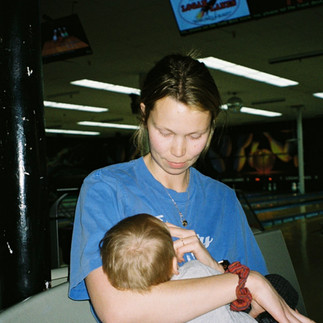

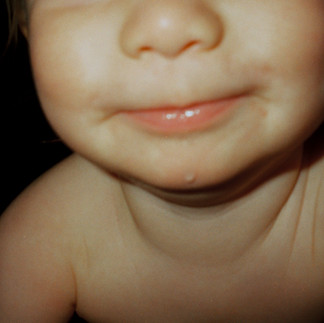


Years ago, scientists studying memory formation conducted an experiment comparing concertgoers who documented a performance with their phones to concertgoers who didn’t. Counterintuitively they found that “the more we rely on our devices to capture moments, the less our brains engage in the deep processing needed for long-term memory formation.” This means that the more concerned we are with “capturing the moment,” the less in-the-moment we actually are, and the less likely we are to remember it in the future.
Further research found that people who extensively documented a concert with photos and videos showed:
Significantly decreased recall of specific performance details.
Reduced emotional connection to the experience.
Lower satisfaction with the overall event.
The science of memory formation suggests that our brains prioritize events in which we were fully present and emotionally engaged. Moments when we were watching, feeling, listening, tasting, and thinking. Not recording. (Concerts Remembered, 2024)
• • •
So for the year 2026, I replaced my phone with a camera, sketchbook, and paperback. While this has led to many changes in my life, right now I want to focus on just one.

“In-between time” is the short, awkward transition-time between tasks when your mind is unengaged and your hands are free. In-between time is waiting for a pot of water to boil, waiting for your husband in the car, arriving early somewhere, experiencing a lull in conversation, standing in line, or waiting for food at a restaurant. It’s also when we instinctively reach for our phones.
Before 2026, I spent my in-between time scrolling Zillow or checking Gmail. These apps did two things for me; they gave me the illusion of productivity, while simultaneously entertaining me. I’m learning about the housing market, I’d reason. Or, I’m checking my favorite clothing brand’s sale. I couldn’t justify mindless social media entertainment, but something informative? That was enough for me.
Occasionally I’d find myself instinctively pulling out my phone only to stare at the home screen. Why did I pull out my phone? I’d wonder before realizing I was in the middle of in-between time.
• • •
Without a phone, my in-between time looks very different. Situations in which I used to scroll– standing in line at the post office, sitting in the car, watching Heyward crawl around, or being otherwise unoccupied in public– I now pull out my sketchbook and draw from observation.


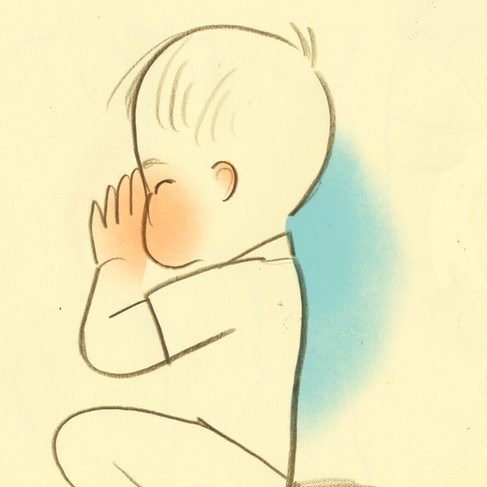


For artists, sketchbooks are highly emotional spaces. Within them, we make bad art on purpose, unload cliche ideas, and destress. A "good" sketchbook is full of ugly brain dumps, weird drawings, and grocery lists; a safe place to store bits of your soul.
Trading scrolling for drawing from observation has somehow supercharged my sketchbook's emotional power. As I flip through its pages, I can vividly recall the emotions, places, and people I encountered throughout the week.








Going without a phone, I worried I'd miss the ability to take photos of whatever I wanted all the time. But drawing from observation proves itself over and over again as a potent way of capturing both memories and emotion.
• • •
Without a phone, in-between time is sacred and productive. It’s focused, not distracted. Intentional, not mindless. In-between time is fertile ground for inspiration to strike, but only if we’re paying attention.
How much of our lives is made up of in-between moments? I would wager enough to significantly move the needle on our relationships, passions, and connection with the divine.
How can you improve your in-between time?

Citations:
“The New Normal: Parents, Teens, Screens, and Sleep.” Common Sense Media, www.commonsensemedia.org/research/the-new-normal-parents-teens-screens-and-sleep. Accessed 23 Mar. 2026.
McDaniel, Brandon T, and Jenny S Radesky. “Technoference: Parent Distraction with Technology and Associations with Child Behavior Problems.” Child Development, U.S. National Library of Medicine, Jan. 2018, pmc.ncbi.nlm.nih.gov/articles/PMC5681450/.
“The Science of Concert Memories: Why Your Phone Isn’t Enough.” Concerts Remembered, Concerts Remembered, 24 Dec. 2024, concertsremembered.com/blogs/news/science-of-concert-memories.


Your insight and wisdom are far beyond your years. And your in-between time has produced incredible work!! Little Heyward is so lucky to have such a thoughtful and intentional momma.
Awesome post, Dear Audrey! We commend you for your self-discipline and recognition of "first things first" as reflected in your resolve to go without your smartphone for a YEAR! (We assume that plan won't deprive you of the blessings of GPS maps guidance, however!) We love your recognition of the benefits of optimizing "in-between time" opportunities--what a great concept! Similar to the potential tyranny of social media, sometimes modern technology simply acts as "bubble gum for the mind." It can be a marvelous servant or a terrible master.... Much love, Deane & Nancy ❤️